Personas that Work
How I used intent-specific personas to move Compare Club away from feature-led and segment-led thinking, and toward more honest, value-driven design decisions.
OVERVIEW
How I used intent-specific personas to move Compare Club away from feature-led and segment-led thinking, and toward more honest, value-driven design decisions.
Thesis
At Compare Club, I used intent-specific personas to reframe product decisions around actual user behavior instead of internal assumptions. Rather than treating personas as static empathy artifacts, I built 2×2 behavioral models that helped teams design for the conditions required for action, trust, and uptake.
That gave us a practical way to move beyond feature-led and segment-led thinking, and toward clearer, more honest, more commercially useful design.
Context
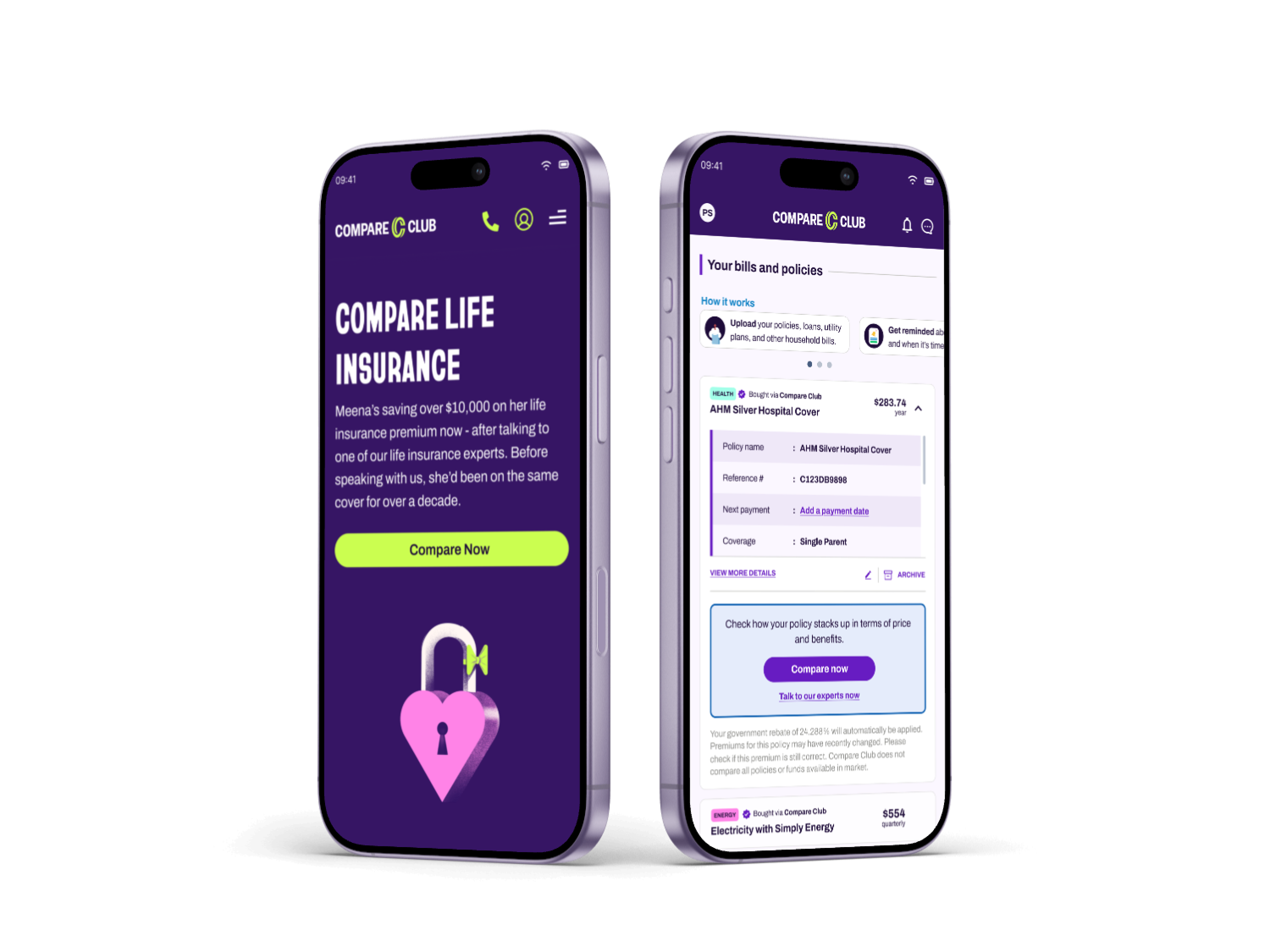
Compare Club’s experience design was being pulled by two different forces: product tended to think in features, while marketing tended to think in segments. Both lenses were commercially familiar, but neither translated cleanly into cohesive design decisions.
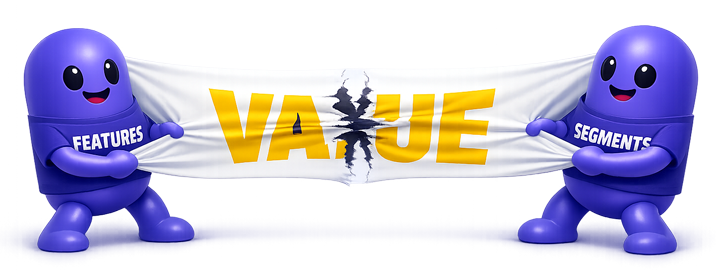
The result was uneven across the business. In Club+, the experience lacked a clear “what’s in it for me” and no obvious starting point. In the funnel, new ideas were often added as isolated features or messages, without a strong model of the person encountering them. My role was to reframe those problems around actual user behavior, so design could become more intentional, credible, and commercially useful.
The problem
The issue was not a lack of customer thinking. It was that the dominant tools for representing customers were not helping the business design better. Segments were too broad to explain how different people would behave in an experience, and feature-led thinking encouraged teams to drop new elements into journeys without enough regard for context, timing, or trust.
That created a kind of design drift. Club+ struggled to make its value obvious, while parts of the funnel relied on messaging and structures that made sense internally but did not fully respect the user’s actual situation. The result was work that could look commercially smart on paper, yet still miss the mark in terms of clarity, fit, and honest engagement.
Insight
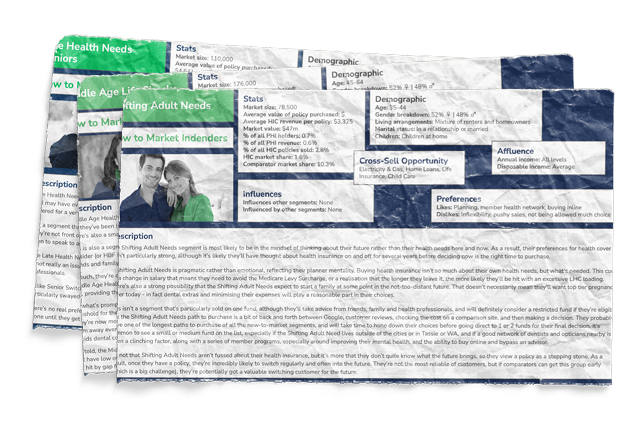
My view is that most personas fail because they become empathy artifacts: useful for discussion, occasionally helpful for inspiration, but rarely decisive enough to shape design. They describe people in broad terms without clarifying what actually needs to happen for a user to engage, trust, or act.
I take a different approach. Personas are intent-specific. Start with the change you want to create, then identify the behavioral levers a person needs to exhibit for that change to happen. Once those levers are clear, design can respond to them directly. In that sense, the persona is not the outcome. It is the mechanism that helps turn user understanding into a better decision.
Method: the 2×2 as a working device
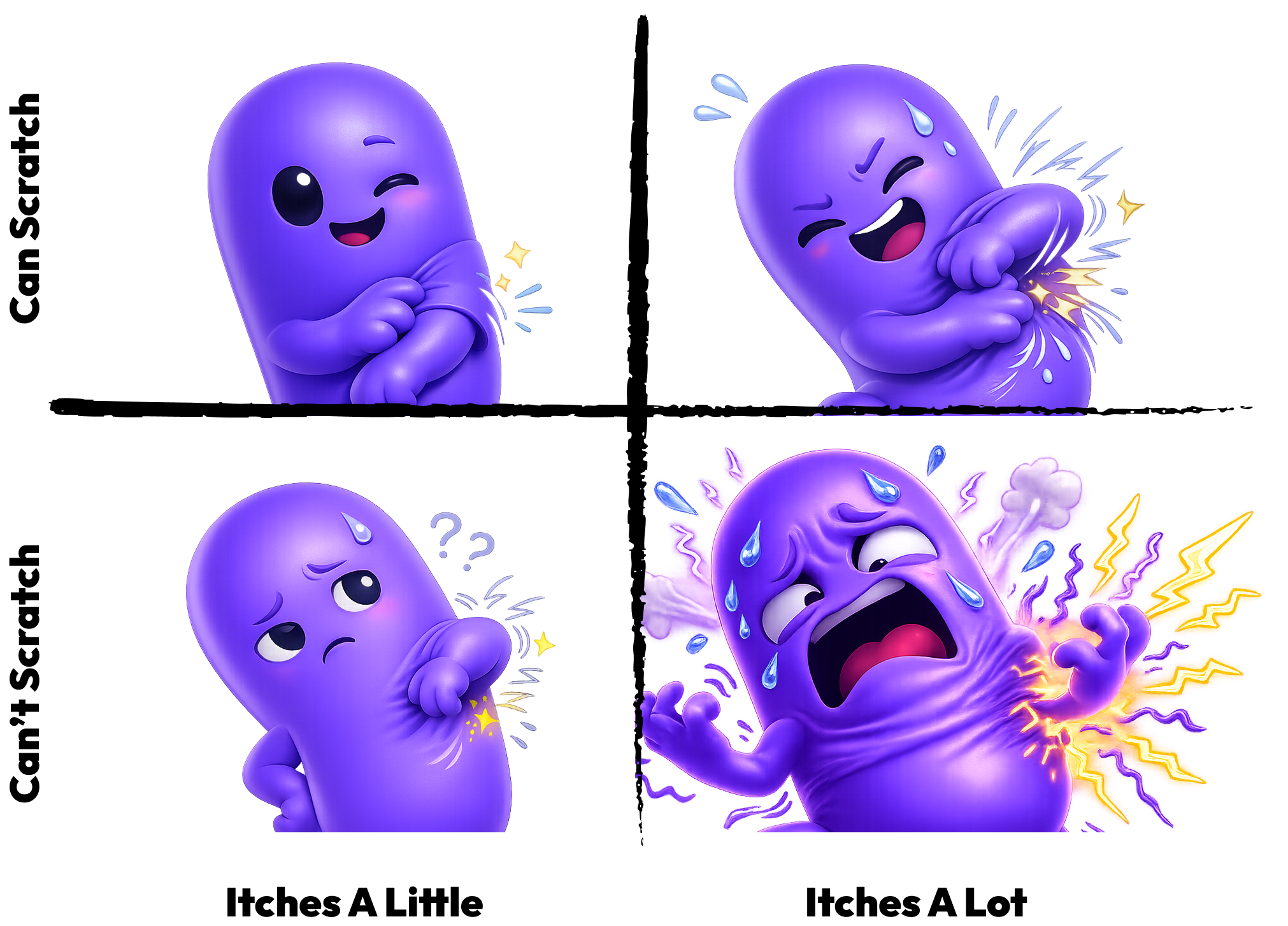
To make personas usable, I reduced them to a constrained decision model. For each problem, I chose two attributes that most strongly shaped whether a person was likely to engage with the experience in the intended way. Those axes were not invented in isolation; they were grounded in research and aligned with stakeholders before the workshop, because once the framing variables are contested, the model stops being useful.
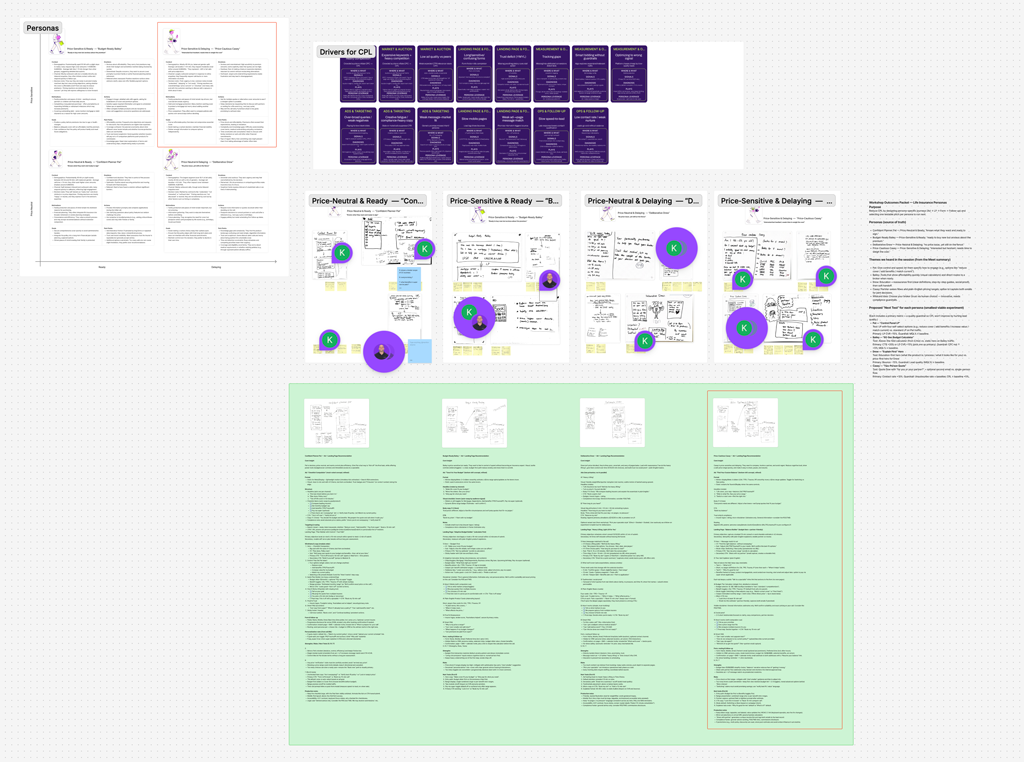
That 2×2 produced four workable personas: enough variation to expose different mental models, but not so many that the exercise became theatrical or unwieldy. From there, the personas became tools for role-play, workshop design, and synthesis. Depending on the stage of the problem, I used them in two modes: to understand the problem more clearly, or to shape a solution more confidently.
Application
I applied this persona method in two different ways at Compare Club: first to shape a more credible landing-page direction for the Life funnel, and second to frame a more realistic solution space for Club+ bill ingestion. The underlying mechanism was the same in both cases, but the workshop design changed depending on the problem. In the Life funnel, the goal was to converge on a stronger solution. In Club+, the goal was to understand the problem more honestly before locking into a path.
Case application 1: Life funnel
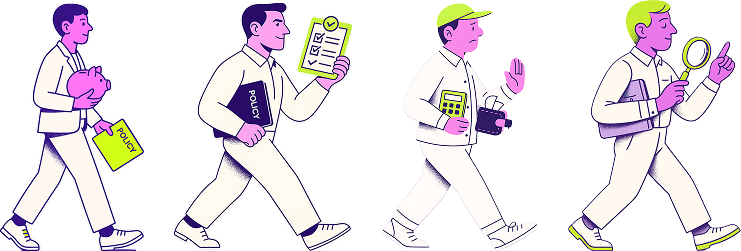
For the Life funnel, the goal was commercial as much as experiential: improve the quality of engagement while supporting stronger efficiency in acquisition. I built a 2×2 using price sensitivity and readiness to buy, grounded in call-transcript analysis and refined with sales input. That gave us four personas that captured meaningful differences in how people approached life insurance, what they were ready to hear, and what kind of reassurance or honesty they needed.
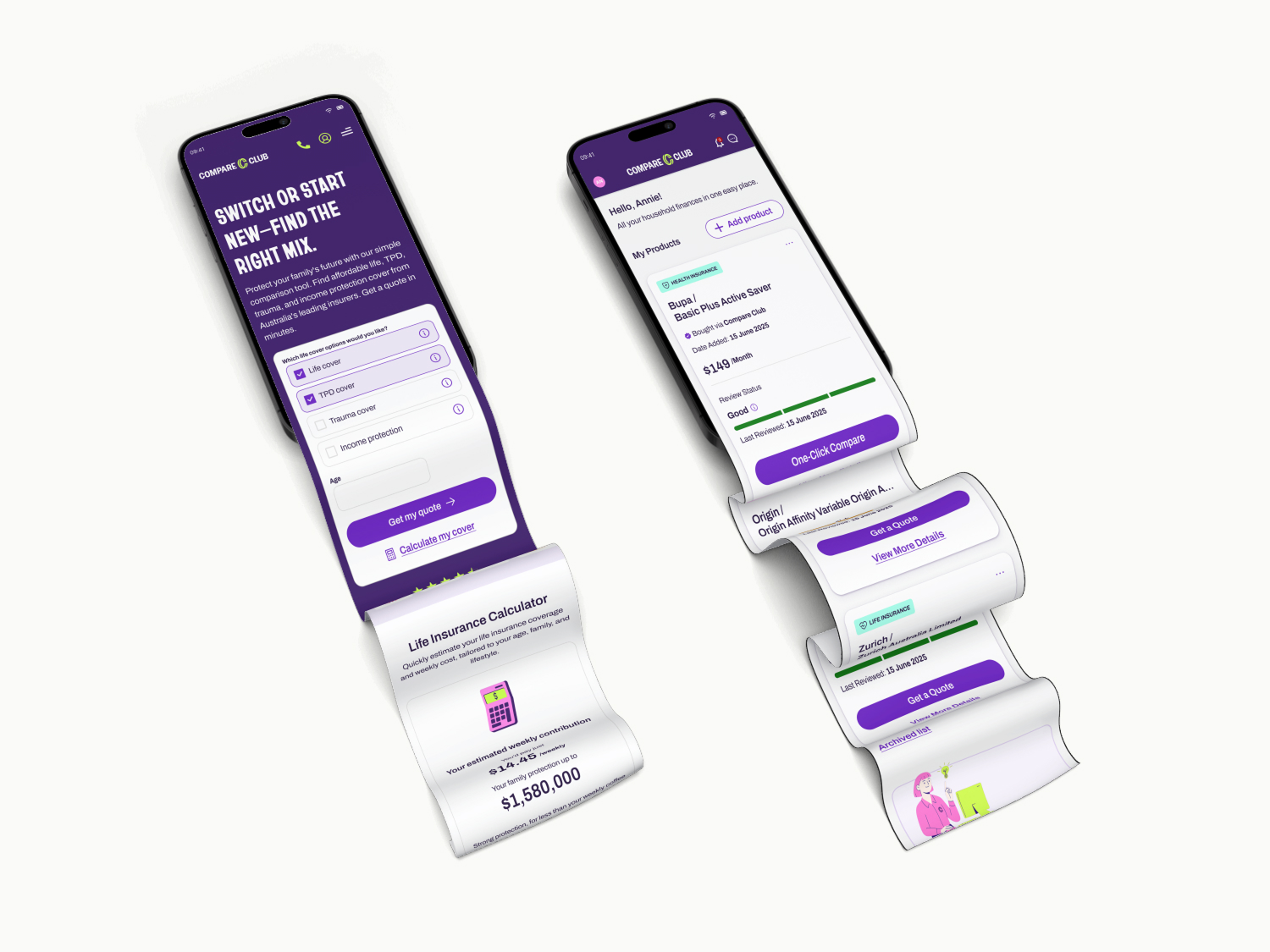
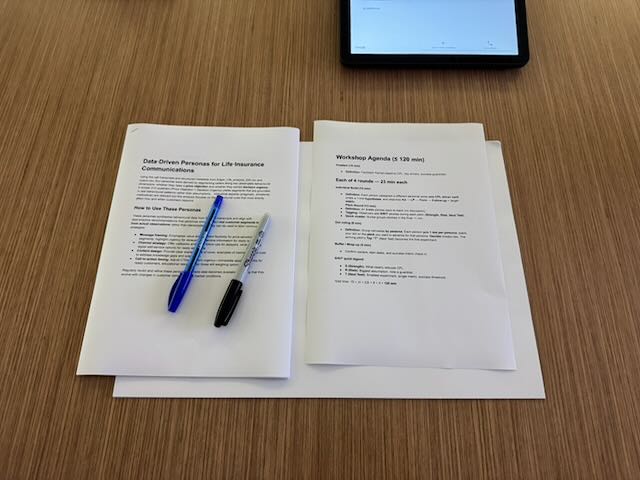
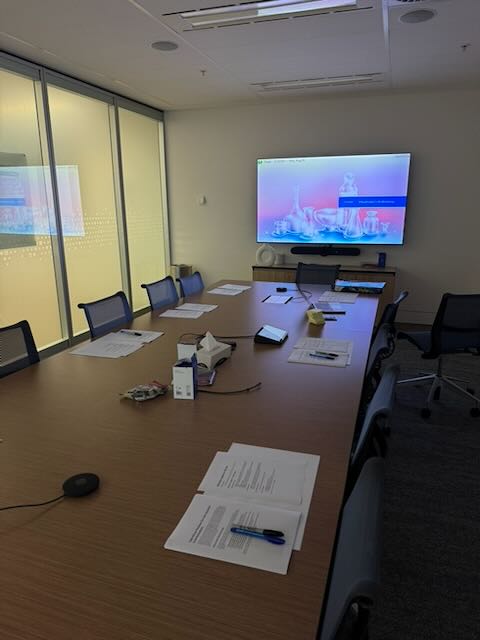
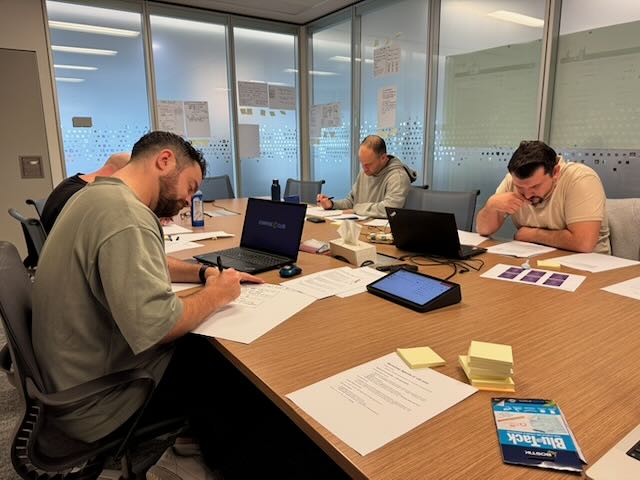
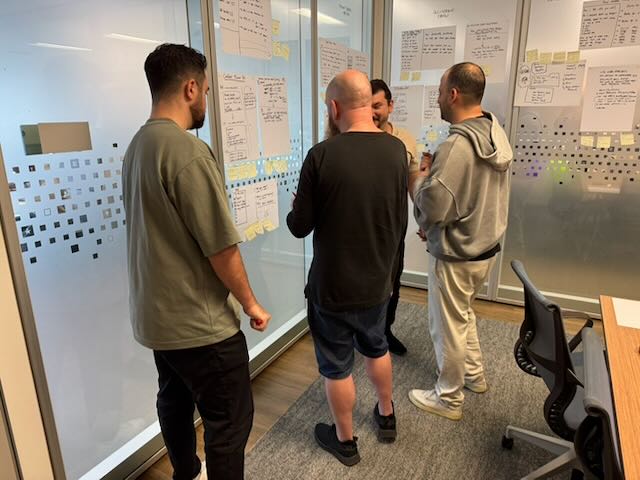
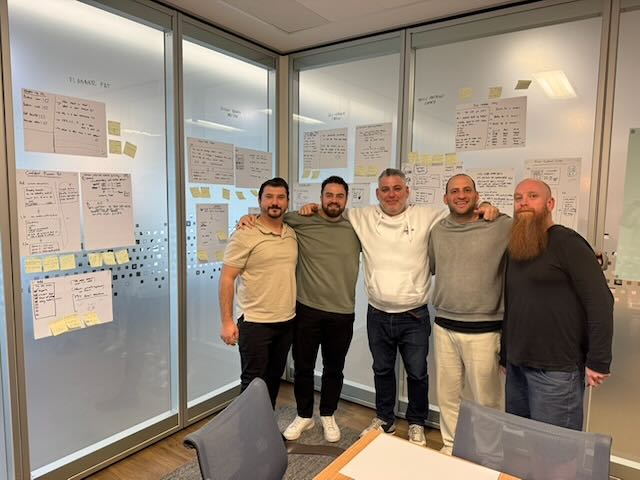
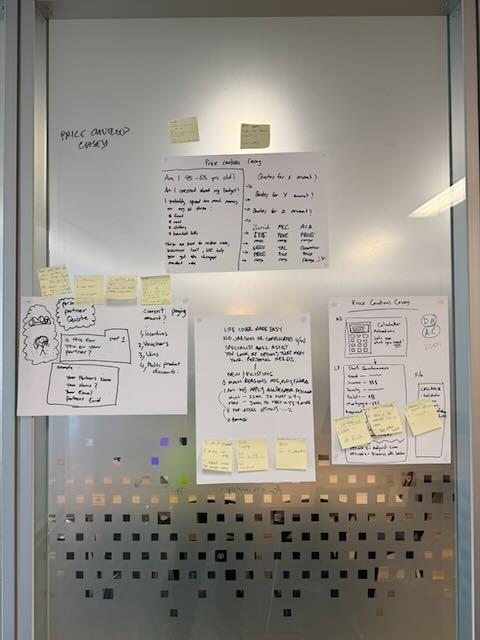
I then used those personas in a collaborative workshop with frontline sales staff. In two rounds, participants designed landing-page directions for all four personas, first generatively and then by borrowing and improving ideas across the room. The exercise transformed tacit sales knowledge into concrete design inputs. When I synthesized the outputs, the pattern was clear: regardless of persona, people responded better when the page respected where they were in their journey, made the value exchange obvious, and stopped hiding the true nature of the process. That led to a more honest landing-page direction, including a calculator concept that made the experience feel more relevant, more credible, and more useful from the outset.
Case application 2: Club+ bill ingestion
For Club+, I used the same persona mechanism earlier in the process, this time to understand the problem rather than converge on a single design. The feature was bill ingestion. The business was leaning toward automatic ingestion through email connection, but I had prior experience across multiple ingestion methods, including email, camera, photo library, file upload, share sheet, and email forwarding. That made it a strong candidate for persona-led exploration, because the right method depended heavily on trust, motivation, and personal organisation.
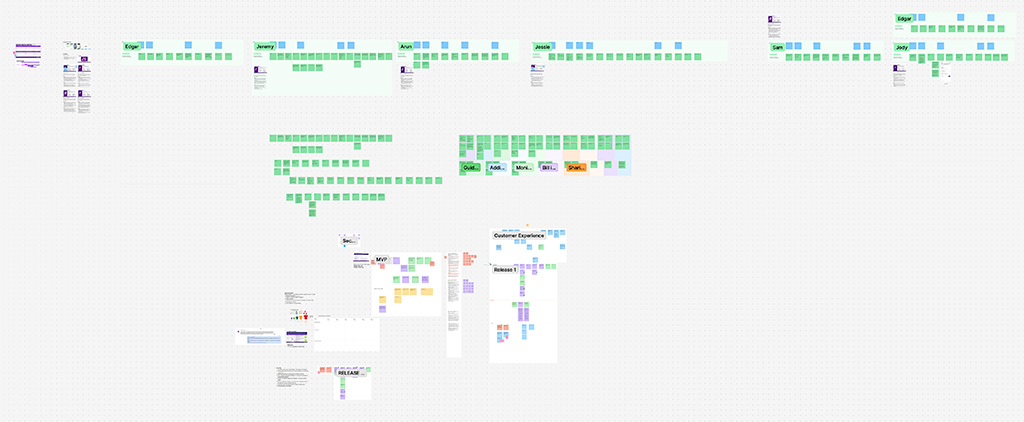
The 2×2 for this case used willingness to get advice from a tool and ability to stay organised. Instead of having each participant design across all personas, I assigned one persona per person and asked them to role-play that user to story-map an ideal journey. The result was a much more divergent and realistic set of paths than a typical story-mapping exercise would have produced. It became clear that there was no single ingestion method that would work for everyone, and that the option the business was most interested in was actually among the least likely to gain uptake early, given the level of trust and value perception required. That insight helped scope the feature more credibly, and the ingestion methods I later designed informed the first development iterations now being implemented.

What changed
The most important shift was not the production of new persona assets. It was a change in how design decisions were made. These workshops gave teams a more credible way to talk about user behavior, expose hidden assumptions, and design around value rather than internal logic alone. In practice, that meant stronger conversations, clearer scoping, and concepts that felt more honest, more relevant, and more commercially grounded.
The work also changed the tone of the output. Instead of relying on “smart” tactics that looked efficient from the business side, the resulting concepts made the value exchange clearer and respected the user’s actual situation. In the Life work, that led to more truthful expectation-setting and a better entry model. In Club+, it helped the team see that uptake would depend on matching different mental models with different methods, not forcing a single solution. Even where implementation paths differed, the underlying shift was the same: design became more actionable because it was grounded in behavior rather than assumption.
Limitations
This approach is powerful, but it is not a perfect representation of reality. Its usefulness depends heavily on choosing the right axes: if the behavioral levers are wrong, the personas become misleading rather than clarifying. It also simplifies people by design, which is what makes it practical in a workshop, but also what prevents it from being treated as literal truth.
There is also an operational limit. These personas are strong design tools, but they are not easy to measure cleanly once users enter the funnel or product. You cannot reliably tag someone in real time as one persona or another and prove performance that way. Finally, like most good design work, the method still depends on organizational support. A strong framing device can improve decisions, but it does not remove the need for timing, buy-in, and commercial alignment.
My role
As Head of CX, I led this work hands-on. I identified the gap between internal framing and actual user behavior, defined the behavioral axes, grounded the personas in research, designed the workshop formats, facilitated the sessions, and translated the outputs into practical design direction. Rather than producing personas as a deliverable, I used them to make user understanding operational.
That was the real contribution: reframing product problems around behavior instead of assumption, and turning what is often treated as UX overhead into something the business could actually use. Some earlier uploaded files have expired on my side, so re-upload them if you want me to weave them into the final polished version.
Reflection
This work reinforced something I’ve come to believe more strongly over time: classical UX methods can become cookie-cutter problem solving. Sometimes they help, but sometimes the problem needs a more bespoke mechanism to expose the truth that matters. In this case, intent-specific personas worked because they were built to drive a decision, not to decorate a process.
It also reinforced a broader lesson about leadership. Good design logic is not always enough on its own. Reframing a problem around actual user behavior can produce more honest, more actionable, and more commercially credible directions, but making those directions stick still depends on influence, timing, and relationships. That is the next frontier for me: not just building sharper methods, but getting better at challenging the status quo before weaker assumptions harden into default practice.
Edgar held the role of Head of Customer Experience at Compare Club between 2024 in Sydney, NSW.
RELATED CASE STUDIES